Monkton Woman’s Family Criticizes Insanity Finding, Questions Investigation in Fatal Stabbing
Family members of a Monkton woman who was stabbed to death by her husband last year expressed anger and frustration Wednesday after he was committed to a state psychiatric hospital rather than sentenced to prison.
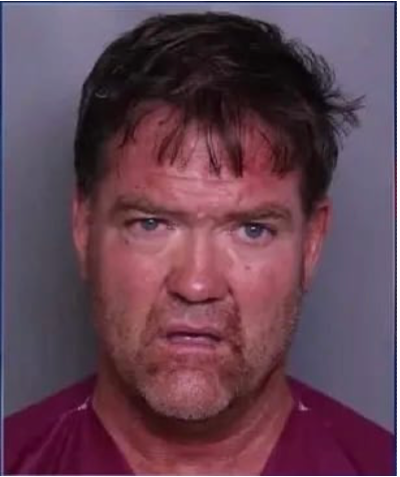
Anthony "Tony" Lechner, 56, was found guilty but not criminally responsible — Maryland's equivalent of an insanity verdict — for the Sept. 29, 2025, stabbing death of his wife, Kimberly "Kimmie" Lechner, at their home on the 900 block of Maplehurst Lane.
"She was beautiful, so incredibly kind, loving, very funny, creative and truly one of a kind," Kimberly Lechner's sister, Erika Andersen-Hiler, told the court.
Family members said Tony Lechner has never taken responsibility for his actions and they criticized the outcome, saying it has compounded the pain suffered by his children and Kimberly Lechner's relatives.
The family also directed criticism at investigators, prosecutors and Lechner's defense attorney over the handling of the case.
"We will never understand the failures of the detectives and the prosecution regarding this investigation," Andersen-Hiler said. "We will never understand Tony's refusal to take responsibility for his actions, and we will never understand how putting his children first has not been a priority."
The Lechners' two college-age children did not attend Wednesday's hearing. Family members said they also disagree with the outcome.
Kimberly Lechner's brother, Matthew Andersen, described the morning he discovered his brother-in-law attacking his sister.
Andersen said he had been sleeping on a couch in the basement when he was awakened around 6 a.m. by the sound of a crash.
He said he heard his sister scream, "No, Tony! I love you!" before finding Tony Lechner kneeling over her and stabbing her with a butcher knife.
Andersen said he tried to pull Tony Lechner off his sister and eventually struck him with a decorative statue to stop the attack, holding him off while calling 911.
"You said you were insane, but somehow you went downstairs either in the middle of the night or in the morning, got a butcher knife from the kitchen and then went back upstairs to kill her," Andersen said.
He also questioned how someone who had allegedly been misusing alcohol and prescription medication for weeks could be found not legally responsible for the killing.
Defense attorney Brian Thompson said his client has no memory of the attack. Thompson said it took months after Lechner's arrest before he became mentally well enough to understand the charges against him and assist in his defense.
Prosecutor Lisa Dever said there had been no prior police involvement at the family's home, no financial problems and no warning signs suggesting violence.
She said Lechner had recently experienced the deaths and illnesses of close family members, which contributed to a mental health crisis that he and his wife had been monitoring. Lechner sought mental health treatment about a month before the stabbing, Dever said.
Under Maryland law, Lechner will be committed indefinitely to a state psychiatric facility, where he will be evaluated annually to determine if he is eligible for release.
A central point of contention for Kimberly Lechner's family was the state mental health evaluation concluding that Lechner did not understand the criminality of his actions at the time of the stabbing.
The family sought access to the report to better understand how evaluators reached that conclusion.
Thompson told the court he had offered to allow the Lechners' children to review the report at his office on the condition that they not take notes or otherwise record its contents.
However, the family's attorney, Thiru Vignarajah, said the family wanted broader access than those conditions allowed.
Family members also criticized the police investigation, noting that Lechner's blood was not tested for drugs after his arrest and that investigators did not search the couple's cell phones for potential evidence.
Lechner became emotional during a brief statement to the court, describing his wife as the best thing that ever happened to him.
"We never argued ... were in harmony. She had my back. She was righteous," he said through tears. "I don't know what happened, really. I loved my wife, and I'll say it until the day I die."