Retrial Ends in Second Conviction for Man in Fatal 2019 Night Club Stabbing
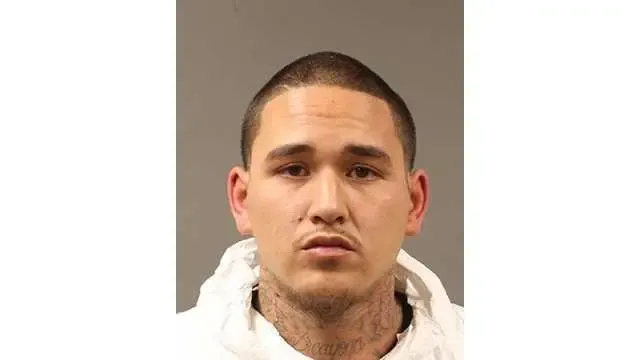
A man whose 2022 murder conviction was overturned in the stabbing death of a Harford County man was found guilty again last week in Baltimore County.
Joshua Edwards, 35, of Joppa, stabbed and killed David Bryan Collins, Jr., 32, on December 21, 2019, outside a strip club on Pulaski Highway in Middle River.
Collins and his friends were at the club to celebrate the upcoming birth of a friend’s child, according to court documents. Edwards, angry that he was hit by a door as Collins and his friends exited the club, stabbed Collins 42 times outside the Excape Nightclub, police said.
Collins was a father of five and a soldier in the Maryland National Guard who was engaged to be married. He died at Johns Hopkins Bayview hospital.

Edwards, who cut off his own pinky finger during the stabbing, was arrested that night after calling medics for himself.
At his original trial in December 2022, jurors found Edwards guilty of first-degree murder and carrying a dangerous weapon with the intent to injure. Judge John Nagle sentenced Edwards to life with the possibility of parole for the first-degree murder charge and three years to run concurrently for the dangerous weapon charge, according to court records.
His original conviction was overturned in 2024 after the Appellate Court of Maryland ruled jurors should not have heard incriminating statements Edwards made during his police interrogation because he had asked for — and not received — an attorney.
Edwards had been serving his sentence in a prison in Hagerstown.
Jurors at the retrial last week in Baltimore County Circuit Court found Edwards guilty of first-degree murder. Sentencing will be at a later date. Prosecutors have said they plan to seek a life sentence.
THE STABBING
The incident began the night of December 20, 2019, when Collins and a group of friends had gone to “daddy diaper party” at Collins’ house, according to a narrative in the appellate decision.
After drinking and celebrating, according to the court document, the group of eight to 10 men went to a bar before going to a strip club. As the group was leaving the club, Edwards was hit by a door, which started an argument.
A police report said:
Edwards stated he was standing outside the door of the Excape nightclub smoking a cigarette when the victim exited and hit him with the door. Edwards and the victim got into a verbal argument and Edwards indicated he wanted to fight in the grass area because he didn't want to fall on the concrete. Edwards stated he took out a knife from his pocket in order to scare the victim but the victim began to fight him. Edwards believed they were fighting over the knife when he and the victim fell to the ground and the knife severed Edwards' finger. Edwards stated he then stabbed the victim.
Edwards was seen giving Collins multiple "body shots," according to the narrative filed in the appeal. “Mr. Edwards continued hitting Mr. Collins even after he fell to the ground and struggled to get back up.”
Edwards left in a car with another man, according to police. Officers arriving to investigate found a folding knife at the scene.
Not long after the stabbing, Harford County medics were called to a home where they found Edwards, whose pinky finger was missing. A crime scene tech later found the finger at the scene.
“Crime Lab Technician Amy Seman found the finger, ink-rolled it for identification, and sent it off with police to see if it could be reattached to Mr. Edwards,” according to court records.
Doctors were not able to reattach the finger.
THE APPEAL
Edwards’ original convictions were overturned in 2024. A state appeals court ruled that the circuit court made a mistake when it allowed jurors to hear incriminating statements Edwards gave to police officers after he had asked about getting a lawyer.
The appeals court ruled Edwards had technically not waived his Miranda rights even though he signed a form indicating he understood his rights and was choosing to talk to investigators.
In its opinion, the Appellate Court of Maryland wrote that “Edwards invoked his right to an attorney properly and never waived that right, and the circuit court erred in denying the motion to suppress the interrogation.”
Collins was assigned to the 1st Battalion, 175th Infantry Regiment and had served in the National Guard for more than nine years, according to the Maryland National Guard.
“A charismatic Soldier with a wealth of knowledge,” Collins’ unit said in a Facebook post. “SPC Collins was always prepared to teach, train and lead young Soldiers and was ready to face any challenge head on.”