Russell Found Guilty, Sentenced to Life for 'Targeted' Dundalk Murder
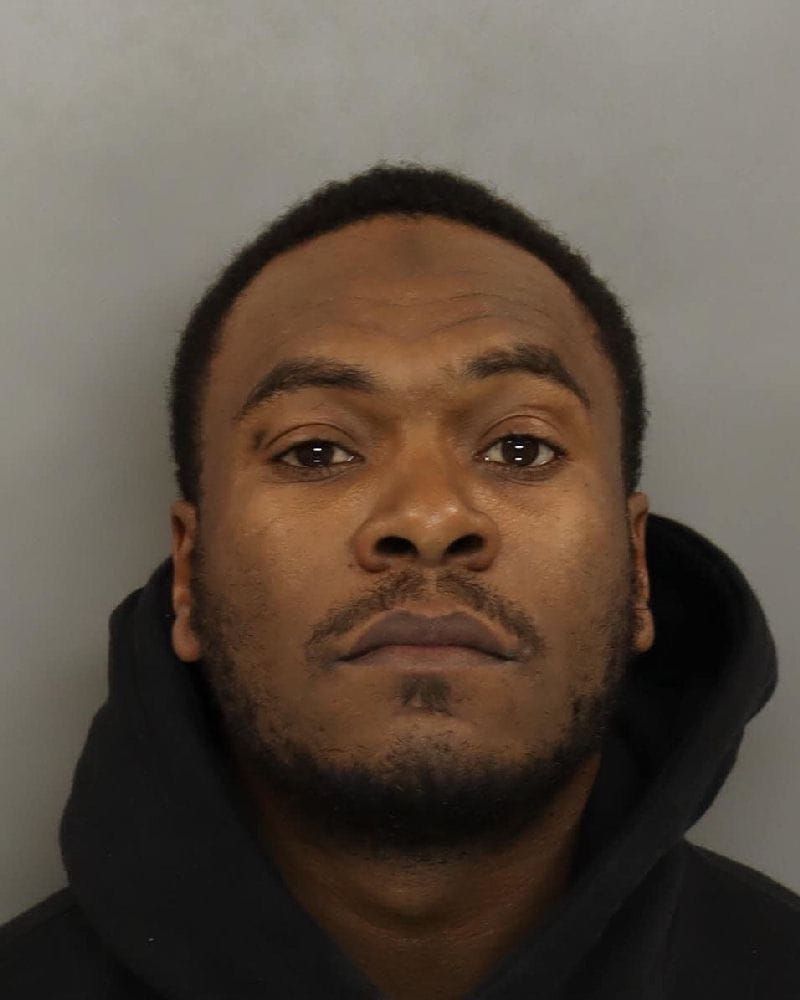
Reader’s note: Both the defense and a prosecution attorney in this case are named John Cox. For clarity, the prosecuting attorney will be referred to as John P. Cox and the defense attorney will be referred to as John. E Cox.
A Baltimore County jury found a D.C-area man guilty of first-degree murder and conspiracy Tuesday in the drive-by shooting of a Dundalk man.
Keith Brian Russell, 40, of North Bethesda, was arrested in November 2023 and charged with the March 2, 2022, murder of 43-year-old Tayvon Scott.
In an unusual move, Russell asked to forgo the usual delayed sentencing and be sentenced immediately.
Circuit Court Judge Keith Truffer said he was troubled that Russell appeared not to know his victim and that the shooting suggested a targeted attack.
‘If that is so, this is the coldest, most calculated type of murder without any provocation whatsoever,” Truffer said.
Russell addressed the court and said he was standing strong in his faith. He maintained his innocence and turned to Scott’s sister in the courtroom and said, “I did not kill your brother.”
Truffer sentenced Russell to life in prison plus 20 years for a firearms offense and 25 years for conspiracy to commit murder.
Russell and co-defendant Cornell Moore are also charged with multiple fatal shootings in a wide-ranging murder-for-hire case in Baltimore City. Those cases have not yet been tried. Moore's Baltimore County trial was set to begin Monday but has been postponed.
Scott was killed in a drive-by shooting in front of his home on Ewald Street in Dundalk. Evidence showed Scott was shot eight times with two different guns.
The case is related to a multi-agency investigation and Baltimore City case charging Russell with five other murders in what has been called a “murder-for-hire” conspiracy case. Investigators from Howard County, Montgomery County, the ATF, and the FBI also contributed to the Baltimore County case.
During Russell’s trial, attorneys in the county case carefully avoided mentioning the city case so as not to prejudice the jury.
During the four-day trial, the prosecution showed jurors messages exchanged between Russell and his co-defendant Moore about Scott’s address. Later, the two shared messages about television news coverage of the shooting and a social media post about Scott’s death. Russell later told police he did not know Scott and only knew Moore as an “associate.”
“Why in the world is Keith Russell interested in a murder that happened on Ewald when he said to (a detective), ‘I don’t know that guy?’” asked Prosecutor John P. Cox in closings.
Cox said the messages were to prove to each other that they had “accomplished their mission.”
The prosecution also introduced video surveillance footage and cell tower data they said connected Russell to the car seen at the shooting, a gray Nissan Rogue with dark tinted windows and no hubcaps. Police found a Rogue matching the description weeks later near the home of co-defendant Moore. A police officer testified he found .45-caliber and .223 cartridge casings in the well of the Rogue’s windshield/hood area. The car also had holes on the roof that the prosecution said were bullet holes.
A witness Thursday testified she saw two masked men shooting as they drove by Scott’s home. The witness said one man was sitting on the passenger-side window opening, firing across the car’s roof.
Jurors also were shown pictures of two .45-caliber handguns. The images were found on electronic devices belonging to Russell. The state said the photos were taken by someone in the driver’s seat of Russell’s van. Another photo extracted from Russell’s phone was taken in front of Scott’s house, also apparently taken from inside Russell’s van.
The defense argued that the case against Russell was circumstantial, with no DNA, no fingerprints, and no eyewitness connecting Russell to the shooting.
“Nobody ever puts him at the scene. Nobody ever puts him in that Rogue on March 2. Not forensics, not eyewitnesses, not even a cell phone for March 2,” said defense attorney John E. Cox. The defense did not call any witnesses to testify on Russell's behalf.
Assistant State’s Attorney Zarena Sita said there was no cell tower data linking Russell to the scene the day of the crime because the cell phone company only kept those records for 90 days. Investigators didn’t get access to his phones until 14 days outside of that time window, she said. Sita pointed out to jurors that everyone seen in the car on surveillance video was dressed in long pants, long sleeves, hoods, masks and gloves, which would have prevented DNA and fingerprint transfer.
“The defendants were being extremely slick,” Sita said. They used multiple phones with different numbers, transferred numbers to other phones, and took pictures of other phones to distance themselves from the messages they were sending, she said. The two also used different vehicles other than their own and switched out tags between vehicles.
“And it kind of worked. For about 19 months, we didn’t know who had done it,” she said.”And thanks to the incredibly thorough investigation that was done by [Baltimore County Police] Detective Fisher and all of the partners from all the other jurisdictions, we were able to figure out who did it.”