Man Convicted of Sexually Assaulting Incapacitated Woman Sentenced to 8 Years
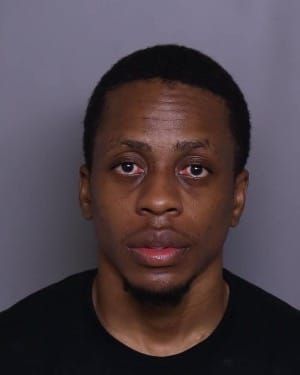
A Baltimore County judge sentenced a 33-year-old man to eight years in prison this week for sexually assaulting a woman who was so impaired that she was barely conscious or able to walk.
Jamar Beckford was convicted in May of one count of third-degree sex offense, two counts of fourth-degree sex offense and two counts of second-degree assault. A jury acquitted him of three counts of second-degree rape, the most serious charges he faced.
On Monday, Judge Nancy Purpura sentenced Beckford to a total of 11 years in prison, suspending all but eight years.
Assistant State’s Attorney Kayla York had asked Purpura to impose 32 years and suspend all but 20 — substantially more than state sentencing guidelines of five to 10 years of active incarceration.
“It is an extraordinary sentence, but what happened to [the victim] was extraordinary,” York told the judge.
York said Beckford had numerous opportunities to recognize how impaired the woman was before sexually assaulting her.
The woman, who was in her mid-20s at the time, testified at trial that she and Beckford were casual acquaintances when he invited her to a birthday celebration at Round One Entertainment in Towson on May 7, 2024.
Over the course of the evening, they went to several locations and drank alcohol before ending up at a hookah lounge in Baltimore City.
At the lounge, the woman said, Beckford prepared drinks for her. She testified that she was beginning to feel the effects of the alcohol and did not want another drink, but Beckford prepared one anyway and encouraged her to drink it.
Within five to 10 minutes of taking a few sips, she testified, she felt dramatically different and could barely walk or keep her eyes open.
At sentencing, York focused on how quickly the woman's condition appeared to deteriorate.
“We know from the evidence that the victim went into the bathroom at that lounge and was fine,” York said. “She could walk. She could function. She could make decisions for herself.”
Then, York said, Beckford insisted she drink something she had not watched him pour.
“Almost immediately thereafter, everything changed,” York said.
Beckford drove the woman’s car and was supposed to take her home.
“But instead, he didn’t take her home,” York said. “He pulled the car over, and that’s where the first sexual assault occurred.”
The woman testified at trial that Beckford sexually assaulted her in her car and later inside her apartment as she drifted in and out of consciousness.
York said what happened when they arrived at the apartment demonstrated the extent of her impairment.
“She fell on the concrete and scraped her knees. She vomited on the bathroom floor. She broke her closet door off its hinges,” York said.
“This is not a woman who was mildly intoxicated,” York continued. “This was not somebody who simply had a couple of drinks and was making ordinary decisions. This is somebody whose body was quite literally failing her.”
York said Beckford witnessed the woman's condition and nevertheless sexually assaulted her twice more.
The woman testified that she awoke the next morning with little understanding of what had happened. It was only later, when she and Beckford went out to eat, that he told her they had sex and that she needed to take Plan B, an emergency contraceptive, York said.
“And that is how she learned what happened to her,” York said.
The woman contacted police the following day and underwent a sexual assault examination at Greater Baltimore Medical Center. A nurse testified at trial that the woman had vaginal tears and scrapes on her knees and elbows.
A toxicology screening found no drugs in her system. A nurse testified, however, that such screening is most effective on the first urine produced after a drug is ingested and that she could not determine how long a drug might have remained detectable in the woman's system.
Detectives from the Baltimore County Police Department’s Special Victims Unit interviewed Beckford about a month later. Beckford said he could not recall being with the woman and told detectives he did not recognize her when shown a photo of her.
DNA testing later found a profile matching Beckford on vaginal swabs collected from the woman.
“And today he’s saying it was consensual, which is very, very different from, ‘I don’t even know who this person is,’” York told the judge.
York said Beckford continued to maintain in his pre-sentence investigation that the sexual contact had been consensual and had failed to acknowledge the harm caused by his actions.
“When he believed there was no physical evidence connecting him to [the victim], he denied knowing her,” York said. “When DNA proved otherwise, the explanation became consent.”
Defense attorney David Shapiro argued for a lesser sentence on Monday, saying that “a lot of poor choices” were made that night.
Shapiro said Beckford and the woman were not strangers and that his client believed at the time that the sexual encounter was consensual. The issue, he said, was Beckford’s ability to recognize her diminished awareness.
“In his heart, he believed it was consensual,” Shapiro said.
The jury found otherwise, Shapiro acknowledged, and he said Beckford was beginning to accept that and examine his own behavior.
“He is beginning finally to look inwardly and seeing that he’s not always right even though he has strong convictions, strong beliefs,” Shapiro said.
“I was not aware that my actions caused me to hurt someone,” Beckford told the judge. “That is not who I am or what I stand for as a man. I do not condone violence against anyone and I would never want to harm anyone.”
Beckford said the experience had forced him to look inward and asked for forgiveness.
York also pointed to Beckford’s community and criminal history.
Beckford was tried in Baltimore City in connection with a 2022 shooting at Larry Flynt’s Hustler Club but was acquitted of attempted murder. Purpura specifically said she would not consider that case in determining his sentence because he was not convicted.
The judge did consider Beckford’s other criminal history, which she said began with a juvenile robbery and included second-degree burglary and handgun offenses. Purpura said Beckford had been placed on probation several times but had never successfully completed it.
Purpura called Beckford's offense a “very serious” and “brutal” crime and said his history showed he had repeatedly failed to take advantage of opportunities to change his behavior.
“He has shown that he is a danger to the community,” Purpura said.
The judge said she had read the victim's impact statement and noted that the woman reported suffering from post-traumatic stress disorder.
“That will stay with her probably the rest of her life in one form or another,” Purpura said.
For the third-degree sex offense, Purpura sentenced Beckford to 10 years and suspended all but eight. She imposed one year for one of the fourth-degree sex offenses to run consecutively to that sentence and another one-year sentence for the second fourth-degree sex offense to run concurrently.
After his release, Beckford will serve five years of supervised probation. In addition to lifetime Tier III sex-offender registration, Purpura ordered him to undergo an evaluation for drug and alcohol use and comply with any recommended treatment.
Editor’s note: Reporting for this story was based on in-person trial coverage and audio transcripts of Monday's court hearing.