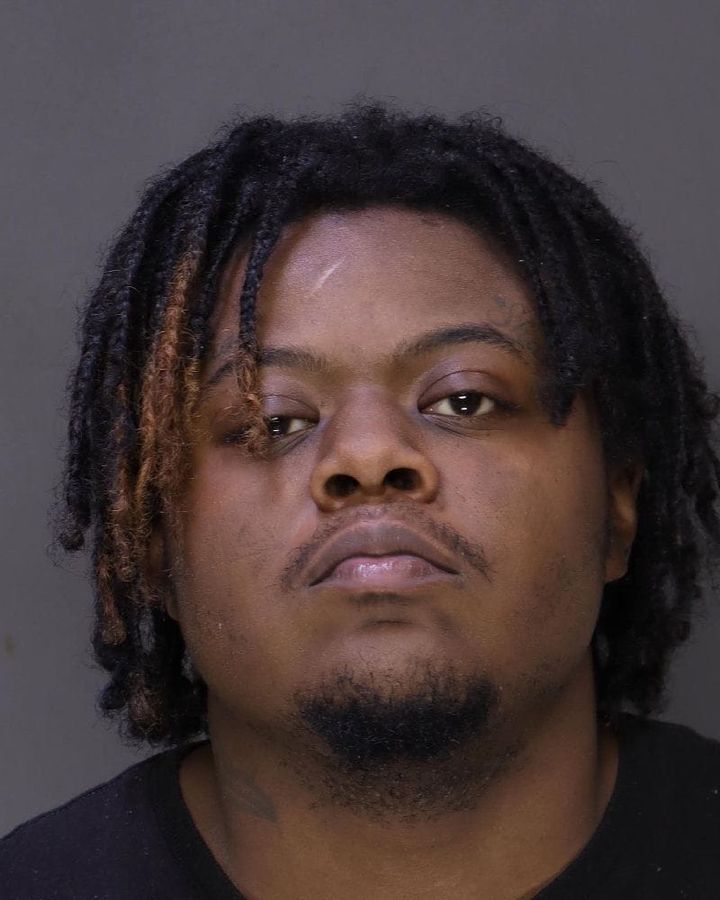
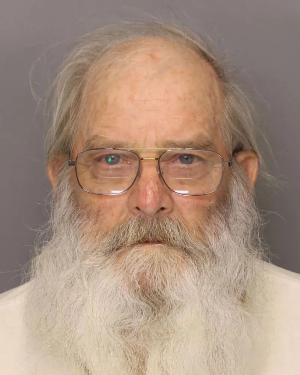
Two Men on Trial in Towson Killing and Kidnapping of Woman Later Found Dead in Baltimore City
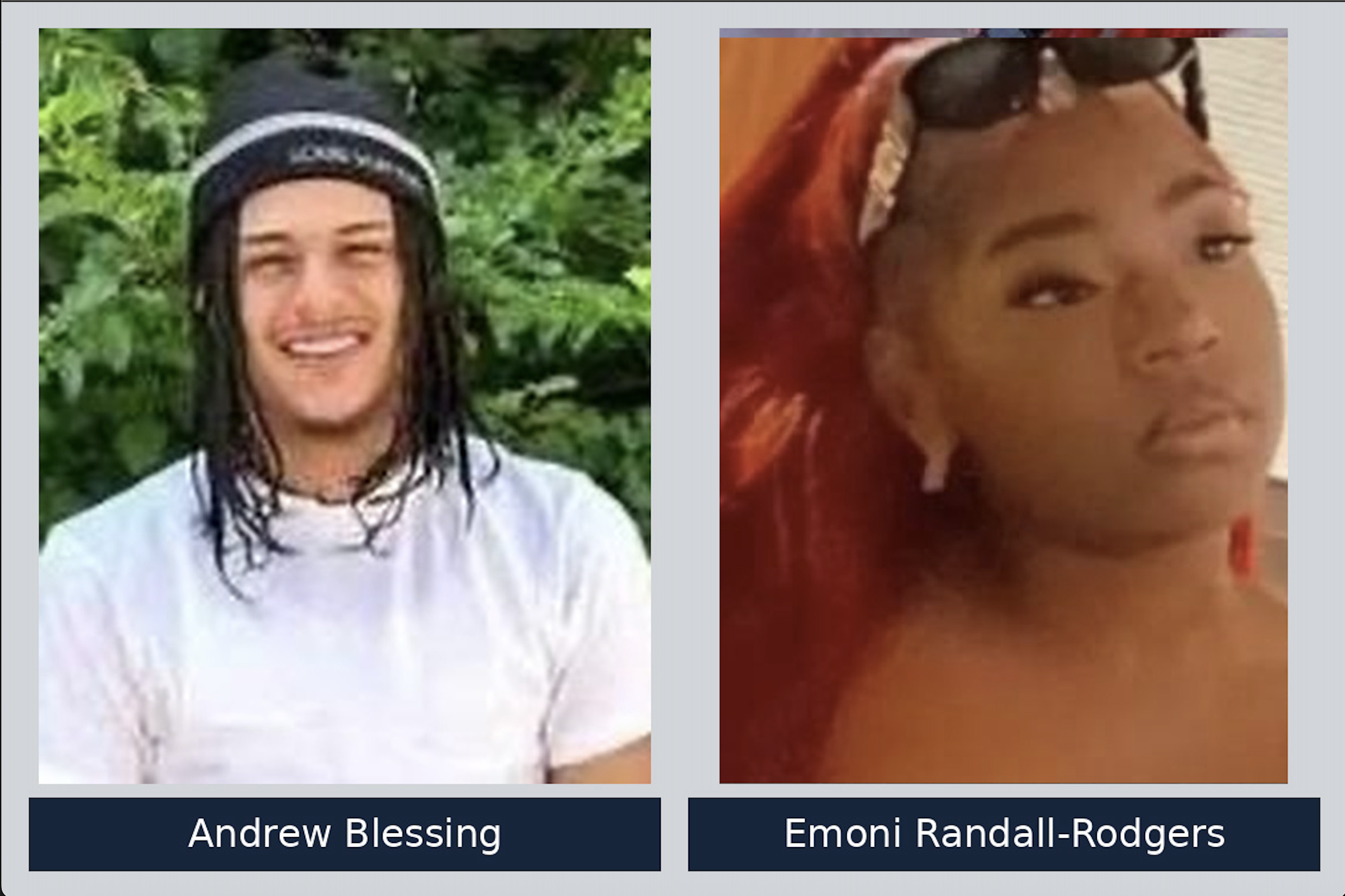
TOWSON — Andrew Blessing’s grandmother awoke Dec. 9, 2024, to gunshots so loud they shook the house. When she went to check on her grandson, she found he had been shot multiple times. The young woman who had been with him earlier that night was gone.
Baltimore County jurors are hearing the case this week against two men accused of murdering 19-year-old Blessing in his bed, then kidnapping Emoni Randall-Rodgers, 21, and taking her to Baltimore City, where she was also killed.
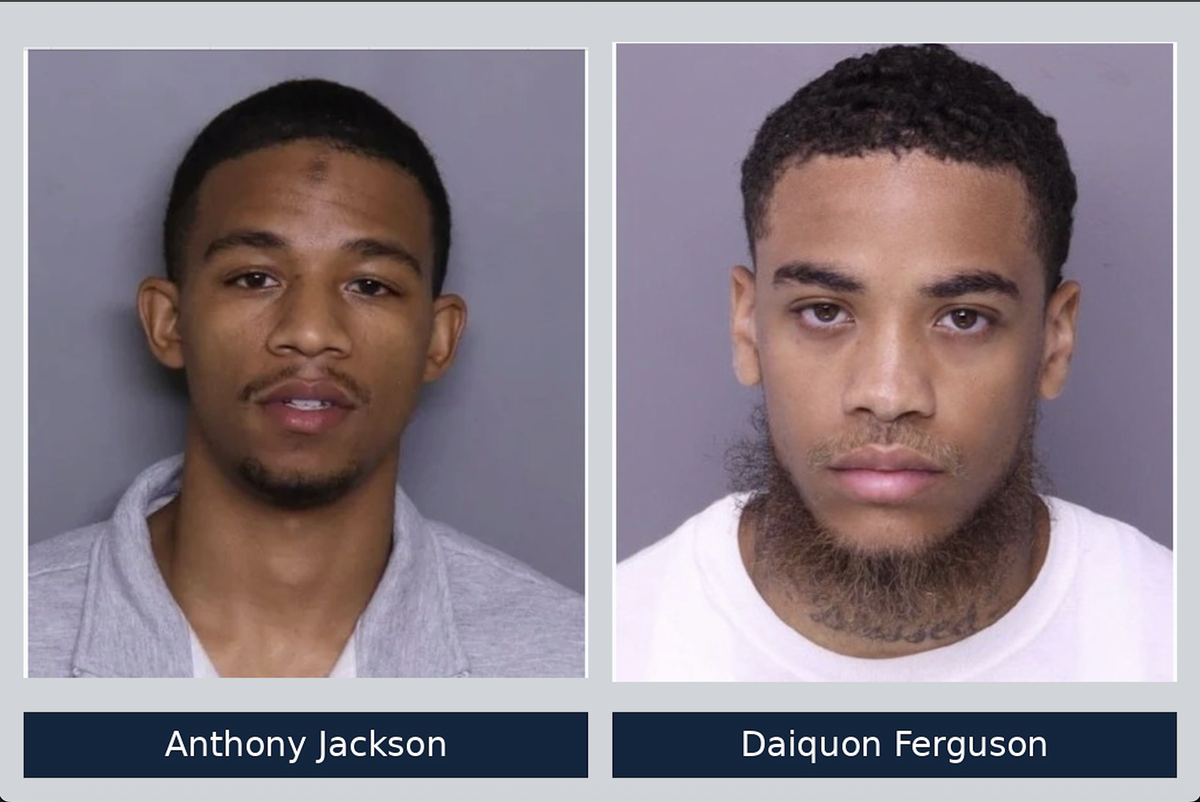
The case against Daiquon Ferguson, 24, of Rosedale, and Anthony Jackson, 29, of Gwynn Oak, involves two killings in separate jurisdictions and a web of cellphone records, surveillance footage, firearms evidence and DNA. A Baltimore City detective testified Wednesday that no one has been charged in Randall-Rodgers’ killing, which police believe occurred in the city.
Prosecutors contend Ferguson and Jackson worked together to kill Blessing inside his home on Beaverbank Circle before transporting Randall-Rodgers to Druid Hill Park, where she was found fatally shot along the side of a roadat 8:10 a.m. Cartridge casings found near both bodies were from the same kinds of guns, according to police.
Both men are charged with first-degree murder, home invasion, burglary, kidnapping and firearm offenses.
Investigators have said Randall-Rodgers had previously been in a relationship with Ferguson and that, in the hours leading up to Blessing’s shooting, she was communicating with a phone associated with Jackson.
Jackson's DNA was found on a gun that police say was one of the murder weapons as well as the steering wheel of the car investigators contend Randall-Rogers was shot in.
Defense attorneys have challenged whether the evidence establishes their clients’ involvement. Ferguson’s attorney, Michael Tomko, has also questioned whether the woman at Blessing’s home that night was actually Randall-Rodgers. He has said in pre-trial hearings that the state has much more incriminating evidence against Jackson than it does his client.
“The state needed a second shooter and they have brought to you Mr. Ferguson,” Tomko told jurors in his opening statement. He said the evidence would leave many unanswered questions.
Tomko has questioned several witnesses about the woman’s hair color, pointing to a description he said Blessing’s grandmother gave police of a woman with bright red hair. When Randall-Rodgers’ body was found along Crow's Nest Road, she was wearing a bonnet and her hair was not red. On the stand, Diane Blessing described the woman’s hair as dark and pulled back in a tight bun.
Jackson’s attorney, Sarah Bordner, cautioned jurors that DNA evidence can be transferred and does not tell the entire story. She said there was no “beef” among the people involved and argued that gaps in the evidence undermined the prosecution’s case.
“You have to ask yourself, did they just go to some random person’s house?” she said.
Diane Blessing, the first witness to take the stand, testified Tuesday that a young woman she believed was Randall-Rodgers was with her grandson in the den he had converted into his living area.
At the time of his death, Andrew was mostly living at his grandmother's home on the 900 block of Beaverbank Circle near Cromwell Bridge Road in a Cape Cod-style home where his great-grandmother also lived.
When Diane Blessing returned home that evening from taking Andrew’s daughter to see Christmas lights, Andrew was lying on his bed and the woman was sitting on a couch, wrapped in a blanket. Both were on their phones, she said. She thought it was unusual that they were not talking to each other.
Diane Blessing went upstairs to bed around 10:30 p.m. About two hours later, Andrew woke her to borrow a lighter. He returned it about an hour after that, she said.
Then, at 2:20 a.m., gunfire awakened her.
“It was the loudest sound I ever heard in my entire life,” she said.
As she entered the den to check on Andrew, she saw through a window a dark sedan slowly pulling away. She then turned her attention to her grandson.
“I yelled, ‘Are you shot?’” she said. “He said, ‘I don’t know. Grandma, my arm hurts.’”
By the time police arrived, Andrew could no longer speak.
“At this point I really basically could see the life leaving him,” she said.
Under cross-examination, Diane Blessing said her grandson had been seeing Randall-Rodgers over the summer and that she had visited their home before.
Diane Blessing also testified that her mother — Andrew’s great-grandmother — had described some “friction” involving the woman that night. According to Diane Blessing, her 91-year-old mother said the woman had been talking on the phone and repeatedly getting up and sitting down.
At 2:01 a.m., Randall-Rodgers messaged a friend with whom she had been texting and FaceTiming that night. Randall-Rodgers told her friend she would call when she got out of a “situation.” When the friend asked what was wrong, Randall-Rodgers responded at 2:19 a.m.: “Just pray.”
The friend said she never heard from Randall-Rodgers again.
Jurors on Tuesday viewed surveillance footage from a neighbor’s home in which roughly 30 gunshots could be heard. Most had a deep sound, interspersed with a rapid series of higher-pitched shots.
Video also shows two figures leaving the house and getting into a car. Randall-Rodgers was not one of those figures, according to the prosecution.
According to charging documents, ballistic testing linked the same firearms to both killings. Police recovered fired 9 mm and 7.62×39 mm cartridge casings, along with unfired 9 mm rounds, at both scenes. A firearms expert testified that the 7.62×39 mm ammunition is typically used in AK-47-style rifles.
Police later recovered a 9 mm handgun they say is linked to both shootings. Investigators said Jackson’s DNA was found on the gun.
An FBI agent testified that Randall-Rodgers’ phone records placed the device near Blessing’s home beginning around 8:30 p.m. and continuing until approximately 2:20 a.m. The phone then traveled from the Towson area to Druid Hill Park, remained there for a few minutes and continued toward the Windsor Mill area near Woodlawn.
Phones associated with Jackson and Ferguson were in Dundalk before the killing, an agent with the FBI’s Cellular Analysis Survey Team ( CAST) testified. Both went offline before Blessing was shot.
A second phone linked to Jackson, described by police as a “burner phone,” remained active and was in communication with Randall-Rodgers' phone several times before the shooting.
Investigators said that burner phone traveled from Dundalk to Beaverbank Circle, remained in the Towson area and ended up near I-695 and Loch Raven Boulevard until around 8 a.m., when it stopped transmitting and never became active again.
Police also obtained surveillance footage from northwest Baltimore City showing two people getting out of a Honda Civic. The driver changed the rear license plate while the passenger repeatedly smashed a cellphone against the ground before throwing it into nearby woods.
Investigators recovered the phone in July 2025. Its SIM card was registered to Randall-Rodgers, police said.
Detectives located the Civic in the 7900 block of Brookford Circle. It belonged to a woman who was Jackson’s girlfriend at the time, according to investigators.
A crime scene technician noted what appeared to be blood spatter in the car. At a pretrial hearing, a detective testified that officers also documented a small hole in the center console.
Testimony began Tuesday and continued Wednesday. The trial is not in session today and testimony is scheduled to resume Friday.