Baltimore County Man Convicted of Orchestrating Attempted Murder of Romantic Rival in Gwynn Oak
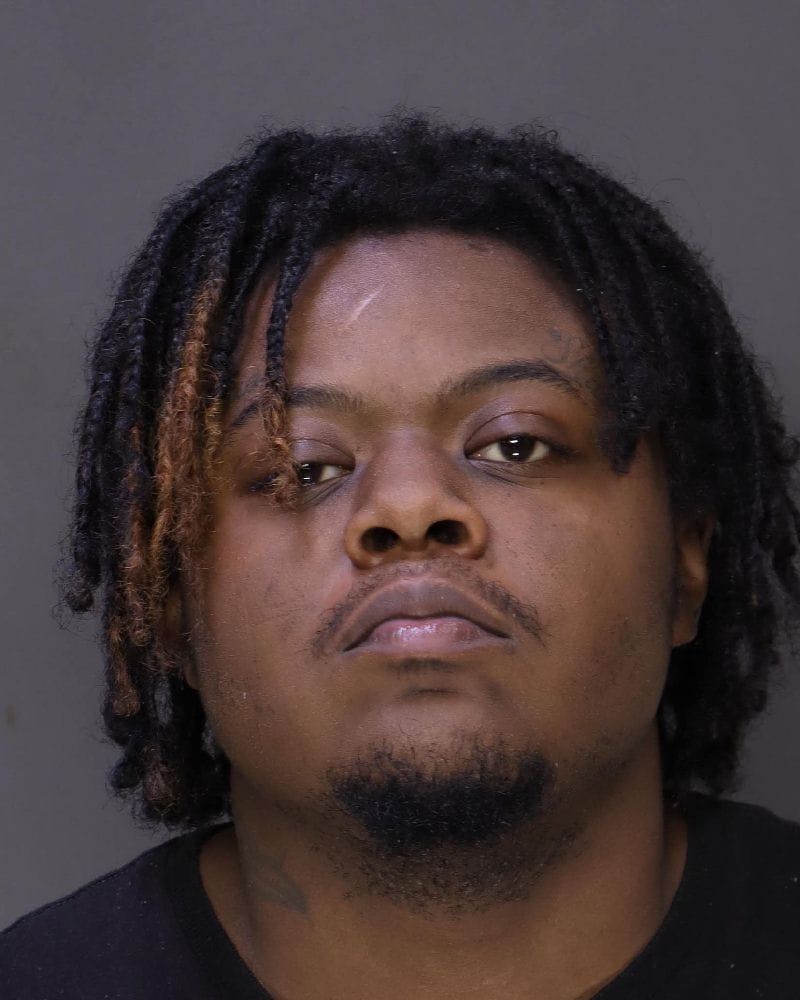
Two days after a man was shot and nearly killed outside a Gwynn Oak home, Von Taylor sent a friend a message saying the victim was still alive.
That message, attached to a $1 Cash App payment, read: "He not gone fool."
A Baltimore County jury found Taylor, 28, of Pikesville, guilty Thursday of orchestrating the 2024 attempted murder of Eden Hempfield, who was dating the mother of Taylor's children. The shooting left Hempfield with life-altering injuries and dependent on a wheelchair.
Prosecutors said Taylor recruited a longtime friend and another man to carry out the shooting, then accompanied them to the home where Hempfield was living with Lynia Hutchinson, the mother of Taylor's children.
Hutchinson had continued seeing Taylor while she was in a relationship with Hempfield and was pregnant with Taylor's child at the time. Hempfield did not know the baby was not his.
Taylor did not fire the gun. Prosecutors argued that he planned the attack, helped lure Hutchinson outside and stood by as a masked gunman shot Hempfield and chased him, firing additional rounds.
The jury deliberated for roughly 3½ hours Thursday before returning its verdict. Taylor was found guilty of attempted first-degree murder, conspiracy to commit murder and two firearm offenses.
Baltimore County Circuit Judge Stacy Mayer ordered a presentence investigation. No sentencing date was set Thursday. Taylor faces up to life in prison.
Prosecutors said Taylor arrived in a white Lexus with two other men: a longtime friend known as "Bullet," who was driving, and a man known as "Cruddy," whom prosecutors identified as the gunman Bullet had recruited for the shooting. Neither man has been charged in connection with the case.
The prosecution's case rested largely on surveillance footage, cellphone records, testimony about Taylor's relationships with those involved and the Cash App message he sent to Bullet approximately 36 hours after the shooting.
Assistant State's Attorney David Lemanski argued that the message revealed Taylor's frustration that Hempfield had survived being shot multiple times.
"He wanted Eden dead," Lemanski argued.
Defense attorney Michael Tomko disputed that interpretation, arguing that the words were ambiguous and could just as reasonably express Taylor's anger at Bullet for involving him in a shooting he neither planned nor expected.
On the night of the shooting, Taylor approached the home on Lehnert Street where Hutchinson lived and asked to speak with her outside. Hutchinson was surprised to see Taylor without their children and asked where the boys were.
Meanwhile, according to prosecutors, Cruddy had positioned himself near the side or rear of the house, wearing a mask and carrying a gun.
Hempfield emerged from the rear of the house and walked toward a vehicle parked nearby, apparently checking on Hutchinson and the activity outside. As he returned toward the house, the masked gunman opened fire.
Hempfield tried to flee, but the shooter pursued him and fired additional rounds. Hempfield suffered gunshot wounds to his chest, arms, legs and the back of his neck.
Lemanski argued that Taylor's stated reason for visiting the home — discussing arrangements for their children — was a pretext to lure Hutchinson outside while Cruddy prepared to shoot Hempfield.
Cellphone records showed Taylor repeatedly calling Hutchinson beginning around 8:25 p.m. and continuing until approximately 9:13 p.m., shortly before he approached the house. The calls went unanswered.
Prosecutors also pointed to Taylor's behavior during the shooting. Lemanski argued that Taylor remained unusually calm as gunfire erupted because he already knew what was going to happen.
Hutchinson, by contrast, screamed, called 911, remained with Hempfield and cooperated with investigators, Lemanski said.
Taylor, prosecutors said, returned to the white Lexus and fled with the two men.
Taylor told investigators that Bullet and Cruddy effectively kidnapped him, refusing to let him leave the vehicle as they drove toward Cherry Hill. He also claimed that his cellphone worked only on Wi-Fi, which would have prevented him from making calls while away from a wireless connection.
But Lemanski said cellphone records showed Taylor communicating while traveling in the vehicle. Location information placed him near Bullet's residence in the Cherry Hill neighborhood of Baltimore, according to the prosecution.
Lemanski said Taylor made no meaningful effort afterward to determine whether Hutchinson was safe, despite having repeatedly called her before the shooting.
Tomko argued that Taylor had no reason to want Hempfield dead. He said witnesses had described no "beefs," significant confrontations, threats or physical fights between the two men, despite their involvement with the same woman.
"Where's the motive?" Tomko asked.
Lemanski challenged that assertion in rebuttal, arguing that the defense itself had portrayed Hempfield as an obstacle in Taylor's relationship with Hutchinson, who was pregnant with Taylor's child.
"Eden was in the way," Lemanski argued.
The defense portrayed Taylor as a devoted father who cared for his children during periods when Hutchinson was unable to do so.
Taylor, who lived with his mother, was receiving disability benefits and had been diagnosed with schizophrenia and major depressive disorder, according to the defense.
Tomko emphasized that Taylor had requested his medication three times during his police interview. He asked jurors to consider Taylor's mental health, his circumstances and his responses to investigators.
Tomko also questioned whether prosecutors had proved Taylor even knew Hempfield was living at the residence.
The defense argued that Cruddy's movements around the property suggested someone had informed the gunman where Hempfield could be found, but there was no proof Taylor had supplied that information.
"Look, clearly somebody wanted Eden dead," Tomko told jurors. "There's no doubt about that."
But he argued that prosecutors had not proved Taylor was responsible.
Tomko acknowledged the devastating consequences of the shooting for Hempfield, telling jurors that what happened to him was horrible and had irreparably changed his life.
He cautioned them, however, against allowing sympathy to substitute for proof.
"If you have more questions than answers, then the evidence does not add up," Tomko said.
In rebuttal, Lemanski argued that the surveillance footage, phone records, relationships among the men and Cash App message supported a single conclusion: Taylor arranged for Hempfield to be shot.
The prosecution relied on Maryland's accomplice liability law, which allows a person who knowingly aids or encourages a crime to be held responsible even when another person physically commits it.
Lemanski argued that Taylor wrongly believed he could escape responsibility because he never handled the gun.
"He doesn't have to be the person who pulls the trigger," Lemanski told jurors.