Former Catonsville Priest Convicted on Sex Offenses of Altar Boy
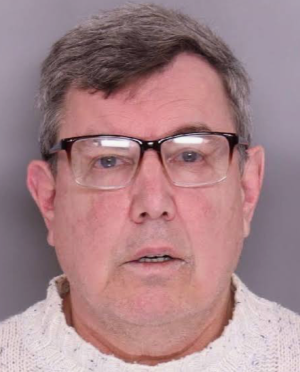
A former Baltimore County Catholic priest has been convicted of child abuse and sex offenses after a former altar boy testified that the priest sexually abused him as a child, warning that his family would burn in Hell for eternity if he did not comply with the priest's sexual demands.
A jury heard three days of testimony before returning guilty verdicts Thursday against William Mannion, 64, of Sparrows Point. Mannion was convicted of one count of child abuse and four counts of second-degree sex offense, all felonies. He faces up to 95 years in prison. Sentencing is scheduled for Dec. 14.
Mannion, who did not testify at his trial, was charged in March 2025 and had remained on home detention while awaiting trial. Following Thursday's verdict, he was handcuffed and taken into custody.
Mannion was known as “Father Bill” when he served as a priest at St. Agnes Church in Catonsville in the mid-1990s. The victim was a student at the parish school and an altar server.
The victim, now in his 40s, testified Tuesday that Mannion was the cool, new young priest at St. Agnes who gave him gifts, including shark teeth and arrowheads, when he was an elementary school student.
Mannion eventually began sexually abusing him, the man testified, telling him he needed to comply with the priest's demands to save his family from eternal damnation.
“He stated that, just like in the Bible, God had come to him in a dream and that if I didn’t do what I was told, that me, my brother, and my family would burn for eternity in Hell,” the victim testified.
The man said Mannion would single him out during religion classes, accusing him of disruptive behavior or answering questions incorrectly and making him wait in the hallway. Mannion would then take the boy to the rectory, where he would bring him into his bedroom, discuss his behavior and coerce him into performing sex acts, the victim testified.
The man said Mannion also sexually abused him multiple times in the shower and once during a Cub Scout camping trip. He was 9 or 10 years old at the time.
“Father Bill would say that we were washing away our sins,” he testified, “and the same deal, that was, if I wanted to save my family … from eternal damnation, and oral sex would happen.”
Afterward, Mannion would instruct the boy to say prayers as penance, the victim testified.
The man said Mannion often appeared agitated after the abuse, leaving him confused about what had happened. Asked by a prosecutor how he felt after the sexual assaults, he gave a striking answer.
“As strange as it sounds, I was excited because I thought I was saving my family,” he said.
The victim also recalled frequently having to refill the wine bottle used during church services, saying it seemed as though “there was a hole in the bottom” because the bottle was empty so often. Mannion later acknowledged periods of excessive drinking in a letter he wrote to the pope.
The victim testified that the abuse occurred between second grade and fifth grade, when his family moved out of state.
He described struggling with the effects of the abuse for decades. He began drinking heavily in his late teens and, as an adult, had difficulty maintaining employment and staying sober despite numerous attempts at rehabilitation.
In 2019, the man met with an investigator from the Maryland Office of the Attorney General during its investigation into allegations of clergy sexual abuse within the Archdiocese of Baltimore. His case, however, was not included in the state's final report.
In 2023, he disclosed the abuse to a therapist, who later helped him report it to Baltimore County authorities.
Mannion's attorney, Christopher Luber, challenged the victim's recollection of the timeline, pointing to inconsistencies in his earlier accounts.
The victim initially placed the abuse between first and third grades but later said he believed it occurred from second grade through the end of fourth grade, in 1994. Mannion did not arrive at St. Agnes until July 1994, a discrepancy Luber argued undermined the man's account.
Luber also questioned how no one at the school noticed the boy returning to class looking disheveled after spending time alone with Mannion.
Jurors also heard evidence about Mannion's own account of his struggles with celibacy, sexuality and his conduct as a priest.
In a 2001 letter to Pope John Paul II seeking to be released from the priesthood, Mannion acknowledged struggling with his sexuality and described sexual encounters during his time in the seminary and later with a parishioner.
He wrote about feelings of guilt surrounding his sexual desires and acknowledged driving around looking for prostitutes, although he said he never hired one.
“All of my sexual explorations were secretive, hidden, and dark,” Mannion wrote. “I refused to process the meaning of such feelings. Thus, I became caught up in an addictive pattern of life.”
Mannion also wrote that he had sought attention and pushed for an assignment at St. Agnes, knowing he would be popular with younger parishioners who had previously been served by older clergy.
“I made myself important in people’s lives,” he wrote. “And I didn’t put Jesus at the center of my ministry. I became the center.”
Mannion had previously helped bring allegations of child sexual abuse against Catholic school teacher John Joseph Merzbacher to the attention of authorities. Merzbacher was later convicted of sexually abusing a student at a Baltimore Catholic school and sentenced to life in prison.
Assistant State's Attorney Stacy Amparo argued in closing that Mannion's cooperation in that case had made him a “hero” in the eyes of an investigator with the Maryland Office of the Attorney General. Amparo suggested the victim's allegations against Mannion may have slipped through the cracks partly because of the investigator's “implicit bias” in Mannion's favor.
Deputy State's Attorney Lisa Dever urged jurors to consider the courage it took for the man to testify publicly about his childhood abuse.
Although the victim had described himself as a broken man, Dever said, jurors could also see him as a “courageous, brave man” who confronted his abuser in a courtroom filled with strangers, fellow parishioners and his abuser.
“How brave he was to do that,” Dever said. “It is the first step, to confront and face your demons, to taking back your life.”
“He is taking back his life. He is going to re-write the narrative. Father Bill stole 30 years from him. Father Bill, it’s time for him to stop hiding behind the church, stop hiding behind the reputation he built for himself and have him pay the consequences for what he has done.”