Man Convicted a Second Time in Fatal Shooting of Former Teacher
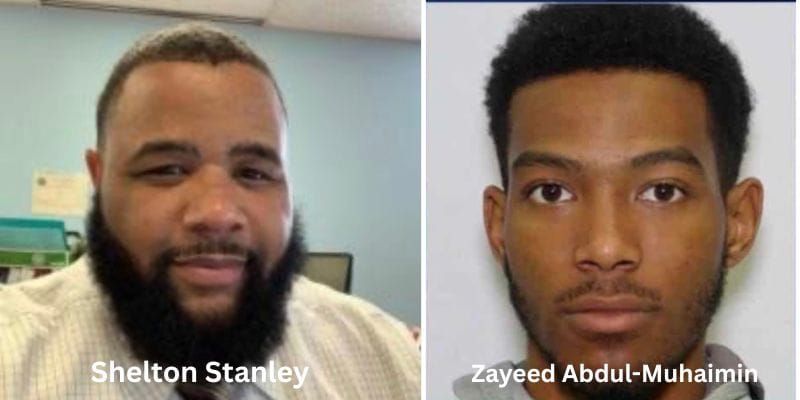
A Baltimore County jury has found Zayeed Abdul-Muhaimin guilty of second-degree murder for a second time in his retrial for the shotgun death of his former middle school teacher.
The jury began deliberations Thursday afternoon after seven days of witness testimony, which included Abdul-Muhaimin taking the stand to tell his side of the story.
A verdict was returned around noon Friday.
Abdul-Muhaimin, 28, was tried on one count of second-degree murder in the Dec. 27, 2020 killing of 36-year-old Shelton Stanley, an assistant principal at Dunbar High School. He faces up to 40 years in prison. Sentencing is set for July 17.
Abdul-Muhaimin was found guilty of the same crime in a 2022 trial and sentenced to 35 years in prison. The conviction was overturned by a state appellate court because potential jurors weren't questioned about the feeling about firearms.
Abdul-Muhaimin admitted shooting Stanley with a shotgun in Stanley's Pikesville home but claimed he fired in self-defense because Stanley was brandishing a gun. The defense said Stanley was upset that Abdul-Muhaimin had not carried out a kidnapping for him and that Stanley wanted sex from him.
The prosecution teamargued Abdul-Muhaimin killed Stanley for money. They said the two had been in a mutual, consensual relationship and that Abdul-Muhaimin never brought up the alleged sexual abuse until after he was charged with murder.
"The defendant never told this story honestly," Assistant State’s Attorney Matt Darnbrough said. "Common sense tells you that this was murder."
The defense team told jurors Thursday in closings that Stanley sexually abused Abdul-Muhaimin when Stanley was a math teacher and Abdul-Muhaimin was in seventh grade, saying he continued to manipulate the defendant as he got older, pressuring him for sex and keeping their relationship a secret.
On the night of the shooting, according to the defense, Stanley told Abdul-Muhaimin he had always wanted him sexually. And, they said, he told Abdul-Muhaimin that because he had not brought back a lover Stanley had wanted kidnapped, Abdul-Muhaimin was "going to give him (Stanley) what he wanted."
"Stanley was threatening him with a gun," defense attorney Michael Scarantino told jurors.
"Zayeed shot him until he was no longer a threat."
THE PROSECUTION
In closing arguments, Assistant State’s Attorney Matt Darnbrough methodically walked jurors through the prosecution’s case against Abdul-Muhaimin, Characterizing the relationship as intimate and consensual, he reminded jurors how often Stanley agreed to give Abdul-Muhaimin money to pay for everything from fast food to college textbooks.
Abdul-Muhaimin, who had lived with his former teacher on and off since he was a teen, asked Stanley for money over 30 times between July and December 2020, he said.
The night Stanley died, Darnbrough said, Abdul-Muhaimin tried to withdraw money using Stanley’s ATM card and ultimately used Stanley’s phone to make bank transfers of $2,500 from his account.
In the days before the shooting, he said, Abdul-Muhaimin discussed selling two guns with another man, a Glock 9mm and a shotgun. Stanley owned a Glock and shotgun, which were never recovered after his death.
“His actions are motivated entirely by getting money,” Darnbrough said.
From the beginning of the trial, the prosecution argued that Stanley’s death was murder, not self-defense.
“There is absolutely no concrete proof at all that Shelton Stanley did anything aggressive at any point on the 27th,” he said. Darnbrough said Stanley never had a gun and never got a shot off.
Stanley was shot at least four times with a shotgun. A medical examiner testified one shot was to Stanley’s back.
“You simply do not shoot somebody in the back and claim self-defense,” Darnbrough said.
Abdul-Muhaimin texted his then-girlfriend after the shooting, saying, “I caught a body.” When she asked why, he responded, “Because it payed [sic].” Darnbrough pointed out that Abdul-Muhaimin wrote nothing to her about being attacked or fearing for his life.
THE DEFENSE
In contrast, defense attorney Michael Scarantino said Abdul-Muhaimin was a young man who’d been sexually abused and manipulated by Stanley since middle school and that he shot his former teacher because he was afraid of him.
When the two first met, he said, Stanley saw a vulnerable child without a father figure and wanted to assume that role in order to get something from him, he said.
“As uncomfortable…as painful as it is to accept, that something was sexual,” he said.
When Stanley offered to drive a preteen Abdul-Muhaimin to and from Friendship Academy, he said, Stanley had “bigger plans for Zayeed.”
Stanley spent years molding Abdul-Muhaimin and another student, targeting them knowing their fathers were in prison, Scarantino said. By the time of the shooting, Abdul-Muhaimin had been living with Stanley on and off for years.
“The evidence shows clearly that Shelton Stanley had secrets,” he said. Stanley, who was a church deacon, never brought Abdul-Muhaimin to church with him, he said. No one in Stanley’s family knew about Abdul-Muhaimin, he said.
“No adult over 20 knew about Zayeed living there,” he said.
In October 2020, Abdul-Muhaimin had begun to realize he’d been manipulated, he said.
Abdul-Muhaimin said Stanley made unwanted sexual advances as Abdul-Muhaimin was confiding in him and confronting him about Stanley’s prior abuse.
Abdul-Muhaimin later texted Stanley that, while he still wanted his former teacher’s friendship and support, he no longer wanted to “partake in man-to-man activities” with him.
Scarantino said the state had not proven that Abdul-Muhaimin wasn’t in fear for his life when he shot Stanley. Police did not test Stanley’s hands for gunshot residue tests, which could have corroborated Abdul-Muhaimin’s claim that Stanley fired a shot into the floor during the confrontation, Scarantino said.
He also disputed the state’s timeline, saying the autopsy findings indicate Stanley was still alive at 1:07 a.m. Dec. 27, 2020, when the bank transfers were made.
Scarantino said the state curated the forensic evidence it presented to the jury, only showing them evidence that backed up their theories and leaving out information that bolstered Abdul-Muhaimin’s version of events. He also said the state’s entire case was based on what Abdul-Muhaimin did after the shooting.
“He was 23 years old and he had just killed his rapist, his former teacher,” and he panicked, Scarantino said.
Abdul-Muhaimin and three others wiped down everything in the home with bleach. The body was wrapped in blankets and plastic and left in the basement. Stanley’s passport, work ID and birth certificate were discarded and his car abandoned at a Timonium hotel. Abdul-Muhaimin flew to San Diego the following day and was arrested a few days later.
Abdul-Muhaimin's sentencing is set for July 17. He faces up to 40 years in prison.